
Finding the Cheapest Auto Insurance Provider in Florida: A Guide
Finding the Cheapest Auto Insurance Provider in Florida requires balancing the state’s high “no-fault” costs with localized risk factors. The fundamental truth is that there is no single “cheapest” company for everyone; instead, the lowest rate is a moving target determined by your specific zip code, credit score, and driving history.
- •Why finding the cheapest auto insurance provider in Florida feels like a full-time job
- ◦The hidden math behind finding the cheapest auto insurance provider in Florida
- •The great loyalty myth: Why "staying put" costs you money
- •Understanding the "No-Fault" factor and PIP
- •A breakdown of Florida’s core insurance components
- •The "Uninsured" epidemic and your wallet
- •How to leverage telematics and modern tech
- •Practical steps to lower your Florida premiums today
- •The impact of Florida’s recent legal reforms
- ◦Frequently Asked Questions
- •Moving forward with a clear strategy
We’ve spent weeks digging through rate filings and policy nuances to help you hack the Sunshine State’s notoriously expensive market. This guide moves past basic quotes to reveal the structural reasons why premiums fluctuate so wildly from Miami to the Panhandle, giving you the leverage to slash your monthly bill.
Why finding the cheapest auto insurance provider in Florida feels like a full-time job
If you’ve lived in Florida for more than a week, you know that everything from the humidity to the traffic patterns feels a bit more intense than in the rest of the country. This intensity carries over directly into your insurance premiums. When we look at the data, Florida consistently ranks as one of the most expensive states for drivers. But why? It isn’t just about the occasional hurricane or the high density of retirees in golf carts. It’s a systemic ***tail of high litigation rates, a massive percentage of uninsured drivers, and the unique “no-fault” legal framework.
When we analyze the market, we see that carriers aren’t just looking at your driving record. They are looking at the legal climate of your specific county. For instance, a driver in Orlando might pay significantly more than a driver in Tallahassee, even with the exact same car and record, simply because the Orlando area sees more personal injury lawsuits. To find the cheapest auto insurance, you have to understand that you aren’t just paying for your own risk; you’re paying for the collective risk of your neighbors.
Our team often encounters drivers who are frustrated because their rates jumped 20% at renewal for no apparent reason. Usually, this is because the insurance provider adjusted their “base rate” for the entire state or a specific region to compensate for a bad year of claims. This means that staying with the same company for a decade can actually be a financial disadvantage. In Florida, the market moves too fast for “set it and forget it” mentalities.
The hidden math behind finding the cheapest auto insurance provider in Florida
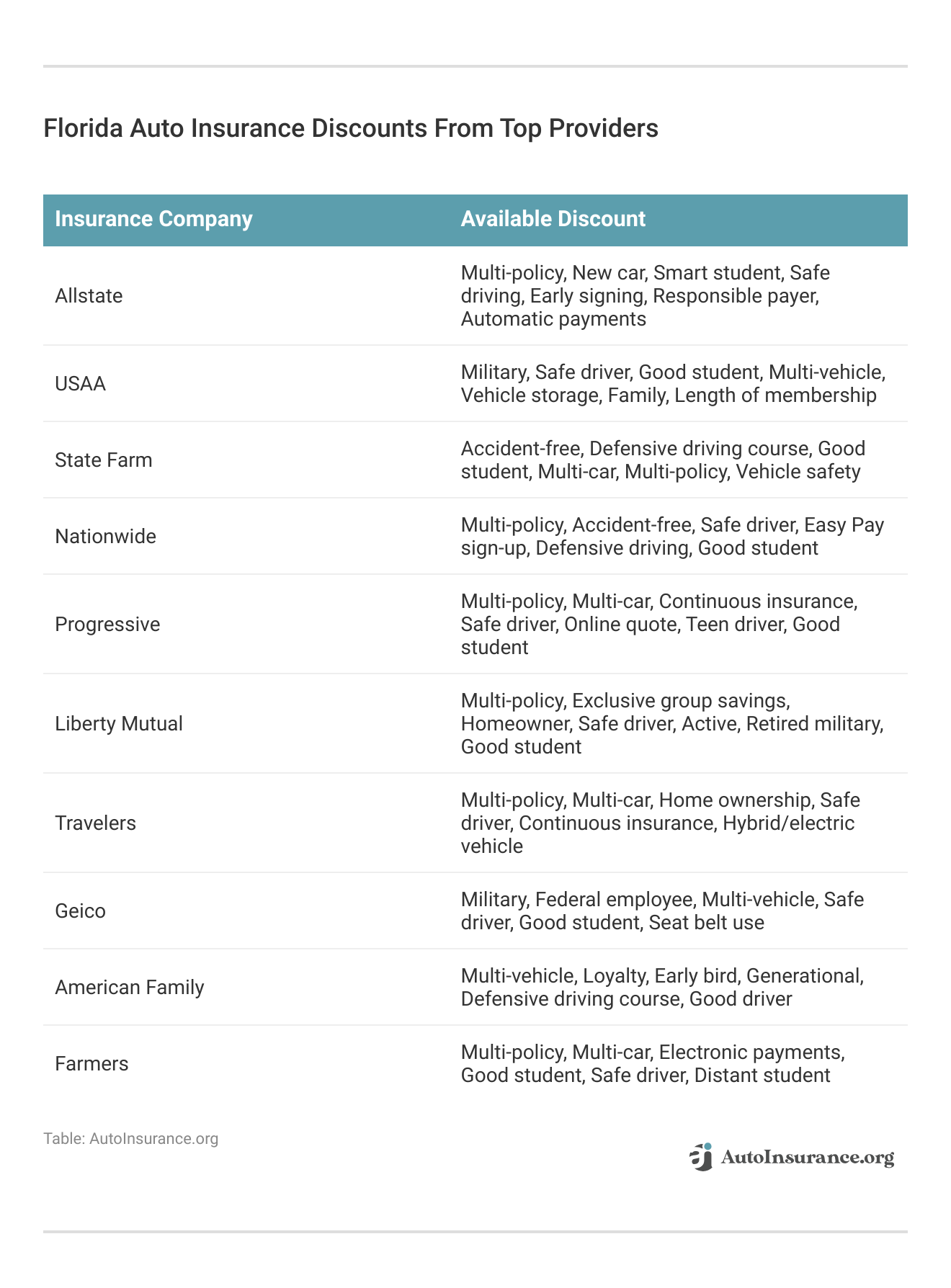
The math that goes into your premium is a black box for most people, but we can shine a light on the gears turning inside. Florida insurers use a “Credit-Based Insurance Score” (CBIS), which is different from your regular FICO score but heavily influenced by it. In many cases, having a lower credit score can impact your premium more than a minor fender bender. This is a bitter pill to swallow, but it’s a reality of how risk is calculated here.
Another overlooked detail our team often encounters is the “garaging location” nuance. If you live in a gated community or have a locked garage, some providers offer a slight nod in your favor, but the bigger factor is the sheer volume of traffic in your zip code. We’ve seen premiums drop by hundreds of dollars just by a driver moving ten miles inland, away from the high-theft and flood-prone coastal strips.
When you are looking for the Best Auto Insurance Providers Reddit User Recommendations, you’ll notice that many locals swear by smaller, regional carriers. While the big national brands have the massive advertising budgets, regional players sometimes have a better handle on the specific risks of the Florida panhandle versus the Everglades, allowing them to price policies more accurately (and sometimes more cheaply) for specific demographics.
The great loyalty myth: Why “staying put” costs you money
Let’s address the elephant in the room: the idea that being a “loyal customer” earns you the best rates. This is arguably the biggest misconception in the entire insurance industry. In fact, many companies use a practice called “price optimization.” This is a fancy way of saying they use algorithms to predict which customers are unlikely to shop around and then gradually nudge their rates upward. They know that for many people, the hassle of switching outweighs the desire to save $50 a month.
Based on our observations, the “loyalty discount” offered by most major carriers is often a pittance compared to the savings you get by switching to a company that is currently “hungry” for new business in your demographic. Every few years, an insurance company might decide they want to grow their footprint in Florida, so they lower their rates to attract new sign-ups. If you aren’t shopping around every 12 to 18 months, you’re missing out on these introductory pricing windows.
We’ve seen cases where a driver saved over $1,000 a year simply by moving their policy after five years with the same provider. The “Aha!” moment for most drivers comes when they realize that the insurance company isn’t a friend; it’s a service provider. You wouldn’t keep paying a higher price for the same gallon of milk just because you’ve shopped at the same grocery store for years, and auto insurance should be treated with the same level of scrutiny.
Understanding the “No-Fault” factor and PIP
Florida is one of a handful of “no-fault” states, which is a term that sounds like it should make things simpler, but it actually adds a layer of cost. In Florida, you are required to carry Personal Injury Protection (PIP). This means that if you get into an accident, your own insurance pays for your medical bills (up to a certain limit), regardless of who caused the crash.
The intent behind PIP was to reduce the number of lawsuits for small medical claims, but in practice, it has become a magnet for fraud and high costs. Because PIP is mandatory, it forms a significant chunk of your premium. When we look at the cheapest providers, we often find that they are the ones who have the best “fraud detection” units, which allows them to keep their PIP payouts lower and pass those savings to you.
However, PIP only covers 80% of medical bills and 60% of lost wages, usually capped at $10,000. This is why many Florida drivers feel “underinsured” even when they meet the legal requirements. If you want to keep your costs down, you might be tempted to take the highest possible deductible on your PIP, but be careful—this means you’ll be paying out of pocket for those initial medical costs if something goes sideways.
A breakdown of Florida’s core insurance components
To help you visualize where your money is going, we’ve put together a quick look at the mandatory and optional components that make up a typical Florida policy.
| Coverage Type | Status in FL | What it covers | Impact on Premium |
|---|---|---|---|
| Personal Injury Protection (PIP) | Mandatory | Your medical bills/lost wages | High |
| Property Damage Liability (PDL) | Mandatory | Damage you cause to others’ property | Medium |
| Bodily Injury Liability (BIL) | Optional (Mostly) | Injuries you cause to others | High |
| Uninsured Motorist (UM) | Optional | Coverage if an uninsured driver hits you | Medium-High |
| Comprehensive/Collision | Optional | Damage to your own vehicle | Variable |
The “Uninsured” epidemic and your wallet
Here is a sobering reality: Florida has one of the highest rates of uninsured drivers in the country. Some estimates suggest that nearly 1 in 5 cars on the road next to you doesn’t have insurance. This is a massive driver of high premiums. When you buy “Uninsured Motorist” (UM) coverage, you are essentially paying extra to protect yourself from people who are breaking the law.
We often get asked if UM coverage is worth the extra cost. While it makes your policy more expensive, our team generally recommends it for Florida drivers. If you are hit by someone without insurance and you don’t have UM coverage, you might be stuck relying solely on your $10,000 PIP limit for medical bills, which can disappear in a single afternoon at the emergency room. Finding a cheap provider often involves finding one that offers competitive rates on UM coverage, rather than skipping it entirely.
How to leverage telematics and modern tech
If you’re comfortable with a bit of “Big Brother” in your life, telematics—those apps or plug-in devices that track your driving—can be the fastest way to a lower rate. Florida is a prime market for this because the base rates are so high. If you are a gentle driver who doesn’t slam on the brakes or speed through school zones, you can see discounts of 10% to 40%.
We’ve observed that for “low-mileage” drivers—retirees or those who work from home—telematics is a game-changer. If you aren’t commuting on I-95 every day, why should you pay the same rate as someone who is? Companies like Progressive, State Farm, and Geico all have robust programs here. The “catch” is that if you are a “spirited” driver (we’re looking at you, Miami commuters), these apps might actually show the insurer that you’re a higher risk than they thought. But for the average person, it’s a powerful tool for lowering the bill.
Practical steps to lower your Florida premiums today
Beyond just switching companies, there are several “levers” you can pull to lower your costs. First, look at your deductibles. If you have a $500 deductible for collision and comprehensive, moving it to $1,000 can drop your monthly premium significantly. Just make sure you actually have that $1,000 sitting in a savings account in case you need it.
Second, check for “affinity” discounts. Are you a graduate of a Florida university? Are you a member of a specific credit union or professional organization? We often find that these small 5% discounts can be stacked. Also, don’t overlook the “Paperless” and “Paid-in-Full” discounts. Paying for six months upfront can often save you more than the interest you’d earn keeping that money in the bank.
Third, be honest about your vehicle’s value. If you’re driving an older car that’s worth less than $3,000, you might be paying more for collision and comprehensive coverage than the car is actually worth. At a certain point, it makes more sense to “self-insure” for the vehicle’s value and drop those coverages, focusing only on the liability and PIP portions.
If you’re unsure how to start the process, you can learn How to Provide Auto Insurance Company Reviews to see what other people are saying about their recent claims experiences. A cheap rate is only good if the company actually picks up the phone when you have a claim.
The impact of Florida’s recent legal reforms
In 2023, Florida passed some major tort reform (HB 837) aimed at reducing the “litigation tax” that residents pay on their insurance. The goal was to make it harder to file frivolous lawsuits and to limit the fees that attorneys can collect. While it’s still early, we are starting to see the market stabilize. Some insurers that had previously pulled out of Florida are considering coming back, which increases competition.
This is important for you because it means the “cheapest” provider today might be a company that didn’t even offer policies in your zip code two years ago. The landscape is shifting. Our advice is to keep a close eye on new entrants to the market. When a new carrier enters Florida, they often offer aggressive pricing to build their “book of business.” Being an early adopter of a new-to-market insurer can lead to some of the lowest rates available.
Frequently Asked Questions
Is the minimum insurance in Florida enough?
Legally, yes, but practically, no. Florida only requires $10,000 in PIP and $10,000 in PDL. If you cause a multi-car accident, $10,000 for property damage will be gone in seconds. We usually suggest higher limits if you have any assets to protect.
Does my credit score really affect my car insurance in Florida?
Yes, significantly. Florida allows insurers to use credit-based insurance scores. Improving your credit score is often one of the most effective ways to lower your insurance premium over time.
Why is my insurance so much higher in South Florida?
Higher population density, higher rates of uninsured drivers, and a higher frequency of staged accident fraud in counties like Miami-Dade and Broward make these the most expensive areas to insure a car in the state.
Should I get “Stacking” Uninsured Motorist coverage?
If you own multiple vehicles, “stacking” allows you to combine the UM limits. It’s a bit more expensive, but in a state like Florida where so many people drive without insurance, it provides a much sturdier safety net.
Moving forward with a clear strategy
Finding a policy that doesn’t break the bank in Florida isn’t about luck; it’s about being an active participant in the process. We’ve seen that the drivers who pay the least are the ones who treat their insurance like any other major utility—something to be audited, compared, and adjusted regularly. The market here is too volatile to trust that your current provider is giving you the best deal just because you’ve been with them for years.
As you look for your next policy, remember that the “cheapest” option must also be a functional one. A low premium is a hollow victory if the company has a reputation for denying legitimate claims or providing poor service during the stress of an accident. Balance your search for savings with a look at consumer satisfaction and financial stability. Florida’s roads are unpredictable, and your insurance should be the one thing you can actually count on.
2 Comments