
The Expert Guide to Top Rated Auto Insurance Providers in Washington State: Local Insights for PNW Drivers
Finding the top rated auto insurance providers in Washington State involves balancing regional specialized service with the financial muscle of national carriers to ensure claims are paid quickly after a rainy I-5 fender bender. The best providers in the Evergreen State aren’t just the cheapest; they are the companies that offer robust Personal Injury Protection (PIP) and high-limit Underinsured Motorist (UIM) coverage tailored to local driving hazards.
- •Why Washington’s Roads Demand a Specific Kind of Coverage
- •The Standout Top Rated Auto Insurance Providers in Washington State
- ◦PEMCO: The Local Legend with Deep Northwest Roots
- ◦USAA: Unbeatable Service for the Military Community
- ◦State Farm: The Reliability Giant for Every Evergreen Zip Code
- •The Great Washington Insurance Myth: Does "No-Fault" Actually Exist Here?
- •Comparing the Top Rated Auto Insurance Providers in Washington State
- •The Hidden Factors That Move the Needle on Your Premium
- •Underinsured Motorist Coverage: Why It’s Non-Negotiable in the PNW
- •The Mechanism of Rate Hikes: Why Did My Bill Just Go Up?
- •A Final Thought on Protecting Your Journey
- ◦Frequently Asked Questions
Whether you’re navigating the gridlock of downtown Seattle or the snowy passes of the Cascades, choosing the right carrier saves more than just monthly premiums. We’ve spent hours dissecting customer satisfaction scores, financial stability ratings, and policy flexibility to help you cut through the marketing noise and find a partner that actually has your back when things go sideways on the road.
Why Washington’s Roads Demand a Specific Kind of Coverage
When we look at the driving landscape in Washington, it’s a bit of a wild mix. You’ve got the dense, tech-heavy corridors of King County where fender benders are practically a lifestyle, and then you’ve got the rugged, deer-heavy backroads of the Olympic Peninsula or the wide-open stretches of the Palouse. Because the geography is so varied, a “one size fits all” policy usually fails someone, somewhere.
In our research, we’ve noticed that Washington drivers face a unique set of risks. The rain isn’t just a cliché; it creates a specific type of slick road surface that leads to frequent hydroplaning incidents. Plus, Washington has a surprisingly high rate of property crime, specifically auto theft in urban hubs. This means that while liability coverage gets you legal, comprehensive and collision coverage are doing the heavy lifting for most residents.
But there’s also the legal side. Washington is an “at-fault” state, but it has very specific rules regarding Personal Injury Protection (PIP). Carriers are required to offer it to you, and you have to reject it in writing if you don’t want it. Based on our observations, many drivers skip this to save five bucks a month, only to regret it when they realize PIP covers medical bills regardless of who caused the accident. It’s these little regional quirks that separate the top-tier providers from the budget-basement options.
The Standout Top Rated Auto Insurance Providers in Washington State
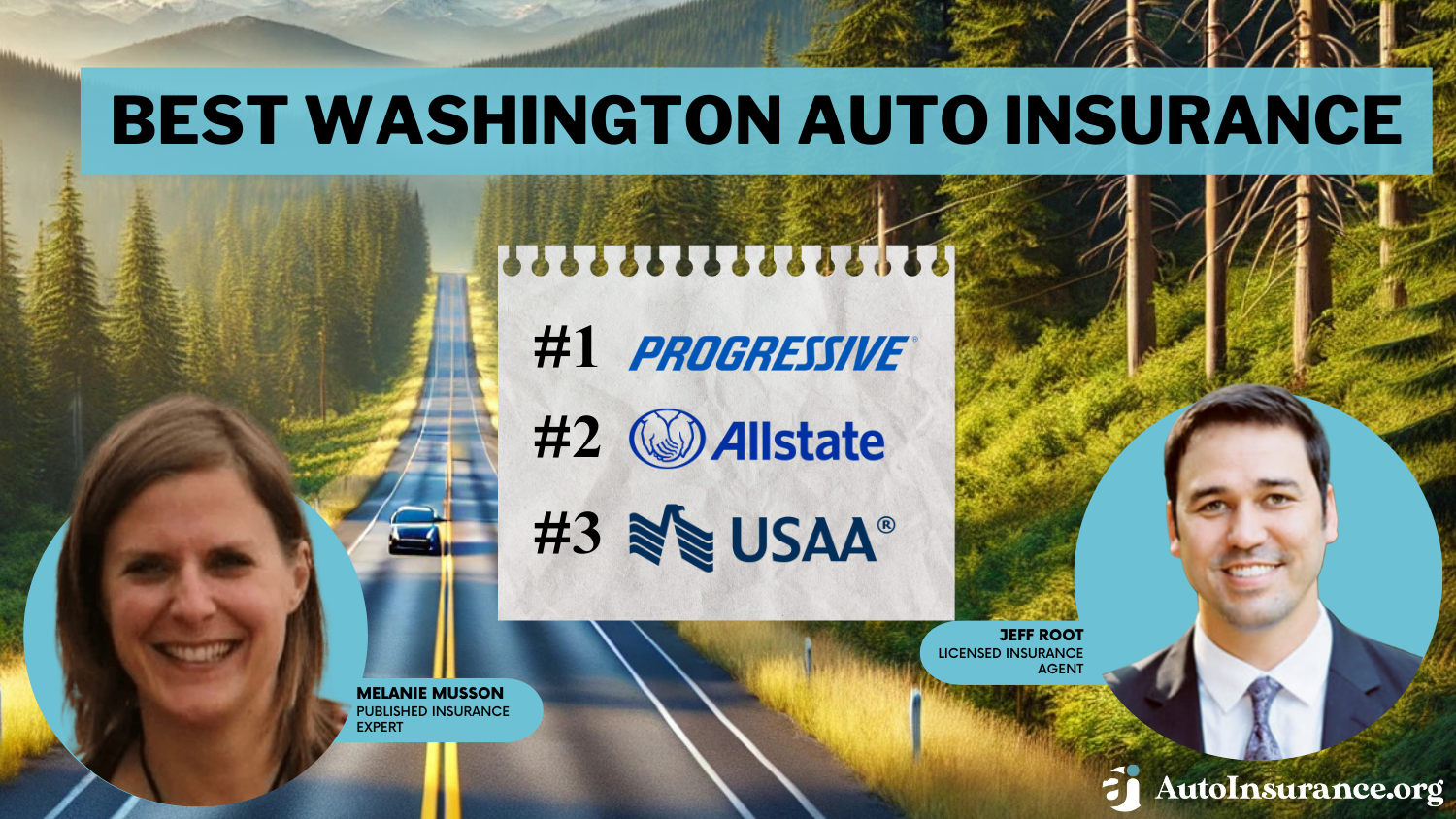
Not every national giant performs well when they hit the ground in the Pacific Northwest. Some feel too distant, while others haven’t quite mastered the claims process for our specific climate-related issues. However, a few names consistently rise to the top when we analyze customer feedback and local claim efficiency.
PEMCO: The Local Legend with Deep Northwest Roots
If you’ve lived in Washington for more than a week, you’ve probably seen the “Northwest Profiles” ads. PEMCO (Public Employees Mutual Casualty Company) is headquartered in Seattle, and that local focus is their biggest selling point. They aren’t trying to win over drivers in Florida or Maine; they are hyper-focused on us.
Because they are local, their adjusters actually know what “Snoqualmie Pass in December” looks like. We’ve found that their claims process often feels more personal and less like you’re talking to a call center in a different time zone. They offer a “Defender” package that bundles a lot of the things Washingtonians actually need, like towing and custom parts coverage (perfect for those of us with roof racks and adventure gear).
USAA: Unbeatable Service for the Military Community
With Joint Base Lewis-McChord (JBLM) being such a massive part of the Washington landscape, we have to talk about USAA. While they are only available to military members, veterans, and their families, they consistently rank as one of the rated auto insurance options in the country, and Washington is no exception.
Their ability to handle the transient nature of military life—like moving vehicles across state lines or storing them during deployment—is unmatched. But even if you aren’t active duty, their customer service scores in the PNW are legendary. They tend to settle claims faster than almost anyone else in the industry, which is a huge relief when you’re stuck without a car in a city with limited transit options.
State Farm: The Reliability Giant for Every Evergreen Zip Code
State Farm is the biggest player for a reason. They have a massive network of local agents. If you’re the type of person who wants to walk into an office in Wenatchee or Bellingham and look someone in the eye, State Farm is usually the go-to.
Based on our observations, State Farm handles the “urban vs. Rural” divide in Washington better than most. Their rates stay relatively stable even if you move from a quiet suburb to a busier city center. They also offer a robust “Steer Clear” program for younger drivers, which is a big deal in a state where the cost of living is already squeezing families. For a broader look at how these giants compare across the country, you might want to check out our Complete List of Auto Insurance Providers to see where they stand globally.
The Great Washington Insurance Myth: Does “No-Fault” Actually Exist Here?
There is a widespread misunderstanding we encounter all the time: the idea that Washington is a “No-Fault” state. We’ve heard people say, “It doesn’t matter who hit me, my insurance just pays for it.” This is a major misconception that can lead to some nasty legal surprises.
Washington is actually a Tort (At-Fault) state. This means the person who caused the accident is legally responsible for the damages. However, the confusion stems from Personal Injury Protection (PIP). Because PIP is a “no-fault” component of your policy (it pays for your medical bills regardless of fault), people assume the whole system works that way. It doesn’t.
If you’re in a wreck and you only have the bare minimum coverage, and the other person is at fault but has no insurance, you could be left holding the bag for your car repairs unless you have Underinsured Motorist (UIM) coverage. This “aha” moment is vital: PIP covers your body; UIM covers your car and your extra pain/suffering when the other guy fails you. In Washington, you really need both to be fully protected.
Comparing the Top Rated Auto Insurance Providers in Washington State
To help you visualize how these companies stack up against each other, we’ve put together a quick breakdown of their primary strengths within the state.
| Provider | Best For… | Standout Feature |
|---|---|---|
| PEMCO | Local PNW Expertise | Seattle-based claims handling |
| USAA | Military & Families | Highest customer satisfaction |
| State Farm | In-Person Service | Largest network of local agents |
| Progressive | Tech-Savvy Budgeting | “Name Your Price” tool |
| Amica | Long-Term Loyalty | Dividend-paying policies |
The Hidden Factors That Move the Needle on Your Premium
An overlooked detail our team often encounters is the massive impact of credit history on Washington insurance rates. For a brief window recently, there was a legal ban on using credit scores to determine insurance prices in Washington. It caused a huge stir. But, after some back-and-forth in the courts, credit scores are back in play for now.
This means that in Washington, your “insurance score” (which is heavily tied to your credit) can sometimes matter more than your driving record. It’s a systemic truth that feels unfair to many, but knowing it allows you to strategize. If you’re looking for rated auto insurance, you have to realize that the “top rated” company for a person with an 800 credit score might be a total nightmare for someone with a 600 score.
Another factor is the “Subaru Tax.” Okay, that’s not a real tax, but because certain vehicles are so popular in Washington (Subarus, Teslas, and Ford F-150s), the cost of parts and specialized labor in local shops can drive up premiums for those specific models. If every shop in Seattle is backed up three weeks for Tesla repairs, your insurance company is paying for three weeks of a rental car, and they bake that cost into your premium.
Underinsured Motorist Coverage: Why It’s Non-Negotiable in the PNW
We cannot stress this enough: Washington has a significant problem with uninsured and underinsured drivers. Depending on the year and the study, roughly 12% to 20% of drivers on our roads are flying solo without insurance. When we analyze cases where drivers are left with thousands in debt after an accident that wasn’t their fault, the culprit is almost always a lack of UIM coverage.
In Washington, UIM is an “add-on” that you can technically decline. Don’t. It’s the safety net that catches you when a “hit and run” happens in a grocery store parking lot or when a beat-up sedan with no coverage slides into you on an icy hill. It’s one of the most affordable parts of a policy, yet it provides the most peace of mind.
Navigating the Top Rated Auto Insurance Providers in Washington State for Specialized Needs
If you’re someone who uses their car for more than just commuting—say, you’re driving for Uber in Bellevue or delivering packages in Spokane—your needs change. Most standard policies have a “commercial use” exclusion. We’ve seen many drivers get their claims denied because they were “on the app” when the accident happened.
Progressive and State Farm are currently leading the pack in Washington for “rideshare endorsements.” These are simple add-ons that bridge the gap between your personal insurance and the insurance provided by companies like Uber or Lyft. Without this, you’re essentially driving unprotected for a good chunk of your day. It’s these specific niches that truly define what a “top rated” provider looks like for a modern Washingtonian.
The Mechanism of Rate Hikes: Why Did My Bill Just Go Up?
It’s a question we hear constantly. “I haven’t had a ticket in ten years, so why did my State Farm or GEICO bill jump 15%?” In Washington, this is often due to “statewide rate filings.” Insurance is a giant pool of risk. If there’s a massive wildfire in Eastern Washington that destroys hundreds of vehicles, or a record-breaking winter in the Puget Sound that leads to thousands of sliding crashes, the “pool” gets expensive.
The Washington Insurance Commissioner oversees these rate hikes, but they can’t stop them if the company proves they are losing money. So, even if you are a perfect driver, you are partially paying for the collective chaos of your neighbors. This is why we recommend “shopping the market” every two years. Loyalty rarely pays in the insurance world; often, the best rates are reserved for new customers.
A Final Thought on Protecting Your Journey
At the end of the day, insurance in Washington isn’t just a legal requirement you check off a list. It’s a financial shield against the unpredictability of the Pacific Northwest. Whether it’s a fallen Douglas Fir limb crushing your hood or a distracted driver on the 405, the quality of your provider determines whether that event is a minor speed bump or a total financial catastrophe.
We suggest looking beyond the flashy commercials. Talk to a local agent, ask about their specific experience with Washington PIP claims, and never—ever—waive your Underinsured Motorist coverage. The peace of mind you get while driving through a November downpour is worth every penny.
Frequently Asked Questions
Is auto insurance more expensive in Washington than in other states?
Generally, Washington sits right in the middle of the pack nationally. However, if you live in Seattle or Tacoma, you’ll pay significantly more than someone in Walla Walla due to traffic density and higher crime rates.
Do I really need Personal Injury Protection (PIP) if I have good health insurance?
Yes, we usually recommend keeping it. Health insurance often has high deductibles and might not cover “loss of essential services” (like someone to help clean your house or drive you to appointments) which PIP can cover after an accident.
Can I get insurance if I live in Washington but my car is registered elsewhere?
This is a tricky one. Most top rated auto insurance providers in Washington State require the car to be garaged and registered in the state where the policy is written. Failing to disclose this can lead to a denied claim for “material misrepresentation.”