
Starting Your Journey: Remote Auto Insurance Claims Careers for Beginners
Remote Auto Insurance Claims Careers for Beginners are entry-level professional roles where individuals manage the lifecycle of vehicle insurance claims from a home-based office environment. These positions focus on investigating accident details, determining liability, and facilitating vehicle repairs or financial settlements using digital appraisal tools and cloud-based communication software.
- •The Evolution of the Virtual Claims Adjuster
- •Remote Auto Insurance Claims Careers for Beginners: More Than Just Phone Calls
- ◦The Claims Adjuster Trainee: A Foundation for Success
- ◦The Role of the Customer Care Specialist in Claims
- •The Great Misconception: The "Mechanic" Myth
- •Understanding the Claims Lifecycle
- •Categorizing Beginner Remote Claims Roles
- •The Essential Toolkit for the Remote Adjuster
- •The Psychology of Remote Claims Handling
- •Career Longevity and Growth Prospects
- •Is a Remote Claims Career Right for You?
- ◦Frequently Asked Questions
We have observed a significant shift in how the insurance industry operates, moving away from local field offices toward centralized virtual hubs. This transition means that those starting their journey in the sector can now access high-quality training and career stability without a daily commute. Our research into the current hiring landscape suggests that these roles offer a unique blend of investigative work and customer service, providing a solid foundation for anyone looking to build a long-term professional path in finance and risk management.
The Evolution of the Virtual Claims Adjuster
Not long ago, the idea of handling an auto insurance claim without ever seeing the vehicle in person seemed impossible. Adjusters had to drive from body shop to driveway, clipboard in hand, physically inspecting every dent and scratch. But the landscape has shifted. Today, sophisticated photo-estimation technology and mobile apps allow claimants to upload images of their damage directly to a portal. This technological leap is what has paved the way for the rise of remote auto insurance claims careers for beginners.
When we analyze how these roles function, we see that the core of the job has moved from physical inspection to digital interpretation. A beginner in this field acts as a coordinator and a decision-maker. You are the person who looks at the evidence—police reports, witness statements, and digital photos—to piece together the story of an accident. It is a puzzle-solving exercise that requires a sharp eye and a logical mind. Because the industry has embraced this digital-first approach, companies are now more willing than ever to hire individuals with little to no prior insurance experience, provided they have the right soft skills and a willingness to learn the regulatory framework.
The remote aspect isn’t just a perk; it is a structural change in how insurance companies maintain their bottom line. By reducing the overhead of physical offices and the travel costs of field adjusters, carriers can invest more in training programs for new hires. This is particularly beneficial for those looking at home and auto insurance careers entry level roles, as it lowers the barrier to entry for candidates who might live far from major metropolitan insurance hubs.
Remote Auto Insurance Claims Careers for Beginners: More Than Just Phone Calls
 remote auto insurance claims careers for beginners – Remote Auto Insurance Claims Careers for Beginners: More Than Ju…
A common misconception we often encounter is the belief that a remote claims role is just a glorified call center position. While communication is a massive part of the job, the reality is far more complex and intellectually demanding. As a beginner, your day is rarely spent just “answering phones.” Instead, you are managing a portfolio of files, each representing a unique legal and financial responsibility.
The Claims Adjuster Trainee: A Foundation for Success
The most common entry point for those seeking remote auto insurance claims careers for beginners is the “Trainee” or “Associate” role. In these positions, you are essentially an apprentice to the world of risk. You start by learning the “language” of insurance—terms like subrogation, indemnification, and tort. We have found that the most successful beginners are those who treat this phase like a specialized college course. You aren’t just learning a job; you are learning a legal and financial discipline.
During the training period, which often lasts three to six months, you will likely work under the close supervision of a senior adjuster. You will handle “simple” claims first—think minor fender benders where liability is clear and no one is injured. This allows you to get comfortable with the software and the rhythm of the work without the pressure of high-stakes litigation. If you are looking for specific companies that offer these structured paths, you might explore United auto insurance careers work from home opportunities to see how they structure their introductory programs.
The Role of the Customer Care Specialist in Claims
.jpg?width=2085&height=5214&name=The Auto Claims Process (003).jpg) remote auto insurance claims careers for beginners – The Role of the Customer Care Specialist in Claims
remote auto insurance claims careers for beginners – The Role of the Customer Care Specialist in Claims
Another path for beginners is the First Notice of Loss (FNOL) specialist. This is the front line. When an accident happens, you are the first person the customer speaks to. Your job is to gather the facts accurately while maintaining a sense of empathy. It sounds simple, but the data you collect in those first ten minutes dictates the entire trajectory of the claim. If you miss a detail about a witness or a specific weather condition, it can cost the company thousands of dollars later in the process.
The Great Misconception: The “Mechanic” Myth
One of the biggest hurdles we see people face when considering this career is the “knowledge gap” regarding car mechanics. Many applicants believe they need to know exactly how a transmission works or the cost of a bumper for a 2023 sedan. We want to debunk this right now: you do not need to be a mechanic to succeed in auto insurance claims.
In reality, insurance companies use massive databases and AI-driven software to calculate repair costs. Your job isn’t to guess the price of a part; your job is to verify that the damage reported matches the story of the accident. For example, if a claimant says they hit a pole at five miles per hour, but the side curtain airbags deployed and the frame is bent, your “aha” moment comes from recognizing the inconsistency in the story, not from knowing the internal combustion engine’s mechanics.
The industry values critical thinking over mechanical expertise. They can teach you how to read a repair estimate, but they can’t easily teach you how to spot a lie or how to de-escalate a frustrated customer. This is why is auto insurance a good career choice in 2026? is a question often answered with a resounding yes—the demand for human intuition in an increasingly automated world is higher than ever.
Understanding the Claims Lifecycle
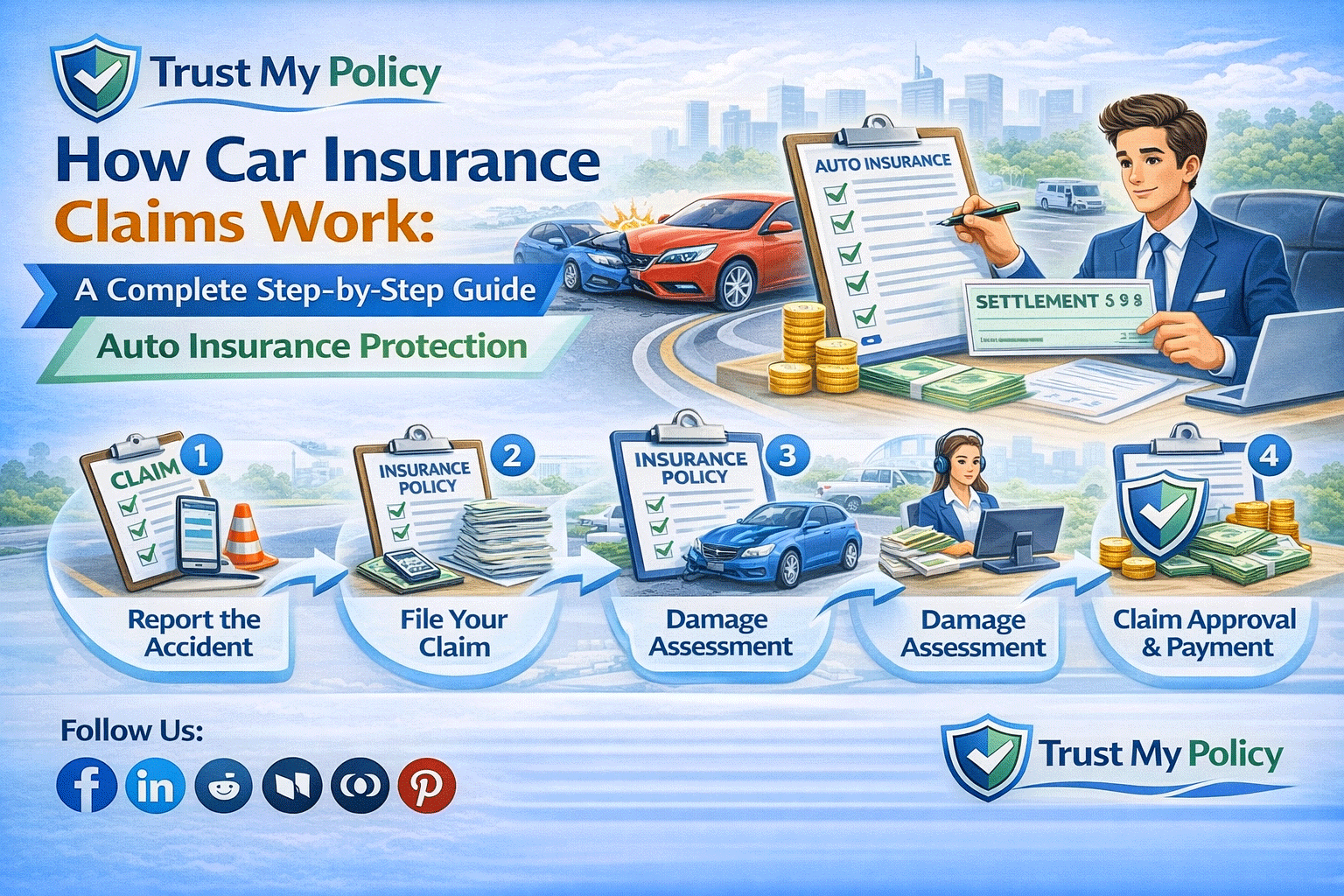
To truly grasp what you will be doing in these roles, it helps to look at the “how” behind the scenes. A remote claim follows a very specific path, and as a beginner, you will likely own one or more segments of this journey.
- The Intake: Gathering the initial report and setting expectations with the customer.
- The Investigation: Reviewing police reports, interviewing involved parties, and checking auto insurance claims history for any red flags.
- Coverage Analysis: Ensuring the policy was active and that the specific type of accident is covered under the terms the customer purchased.
- Damage Assessment: Working with virtual appraisers or body shops to determine the cost of repairs.
- Liability Determination: Deciding who was at fault (0% to 100%) based on state laws and evidence.
- Settlement: Issuing payment to the customer or the repair facility and closing the file.
This structured flow is why the job is so well-suited for remote work. Everything is documented in a central system, allowing managers to see your progress and provide feedback without needing to sit next to you.
Categorizing Beginner Remote Claims Roles
 remote auto insurance claims careers for beginners – Categorizing Beginner Remote Claims Roles
To help you visualize where you might fit, we have categorized the most common entry-level paths in the table below.
| Role Title | Primary Focus | Technical Level | Key Requirement |
|---|---|---|---|
| Claims Associate | Administrative Support | Low | Organization |
| FNOL Representative | Initial Intake | Medium | Empathy |
| Adjuster Trainee | Liability & Damage | High | Analytical Skills |
| Subrogation Assistant | Payment Recovery | Medium | Attention to Detail |
The Essential Toolkit for the Remote Adjuster
When we look at what makes a beginner successful in a remote setting, it often comes down to their “digital fluency.” You will be toggling between multiple screens, using VoIP (Voice over IP) phone systems, and managing complex claims databases. But beyond the hardware, there is a specific set of tools that define the modern remote claims experience.
Most large carriers use proprietary software, but you will likely encounter industry standards like CCC One or Mitchell for estimating. Understanding how these tools integrate with the company’s main system is a major part of your initial training. Because you are working from home, your ability to troubleshoot basic internet issues and maintain a secure, private workspace is non-negotiable. Many companies, such as those offering auto owners insurance careers remote job openings, will actually ship you the necessary hardware—dual monitors, a laptop, and a headset—to ensure you have the same capabilities as an in-office employee.
There is also the matter of state licensing. This is a precise contextual limitation that many beginners overlook. In the United States, most states require claims adjusters to be licensed. However, if you live in a state that doesn’t require a license, you will often be asked to obtain a “Designated Home State” (DHS) license, typically from Florida or Texas. These licenses are highly valued because they offer reciprocity with many other states, allowing you to handle claims across the country from your home office.
The Psychology of Remote Claims Handling
An overlooked detail our team often encounters is the emotional labor involved in claims. You are often talking to people on one of the worst days of their month. They might be shaken up from an accident, worried about how they will get to work without a car, or frustrated by the complexities of their policy.
Successful beginners develop a “thick skin” and a high level of emotional intelligence. You have to be able to deliver bad news—such as a denied claim or a total loss valuation that is lower than the customer expected—while remaining professional and calm. This is where the remote aspect can actually be a challenge. Without the physical presence of teammates to vent to after a hard call, you have to be proactive about your mental well-being and use virtual “water cooler” chats to stay connected.
As remote auto insurance trends continue to evolve, we see more companies incorporating “wellness checks” and virtual mentorship into their remote culture. They recognize that a beginner who feels isolated is more likely to burn out, so they invest heavily in building a digital community.
Career Longevity and Growth Prospects
 remote auto insurance claims careers for beginners – Career Longevity and Growth Prospects
Starting in a remote claims role isn’t just about finding a job you can do in your pajamas. It is a gateway to a massive ecosystem of professional opportunities. Once you have mastered the basics of auto claims, the skills are remarkably transferable.
You might move into “Special Investigations” (SIU), where you hunt for insurance fraud. You could transition into “Catastrophe Adjusting,” where you help handle claims after major events like hurricanes (this often involves traveling, but many roles remain remote for desk-based support). Or, you might find a niche in Direct auto insurance careers work from home guide paths, focusing on direct-to-consumer service models.
The path from a beginner to a senior adjuster, or even a claims manager, is well-defined. Most companies have a clear “leveling” system (e.g., Adjuster I, Adjuster II, Senior Adjuster) that comes with predictable pay raises and increased authority. Because the industry is so large and essential, it tends to be recession-resistant. People may stop buying new cars during a downturn, but they rarely stop insuring the ones they already have, and accidents happen regardless of the economy.
Is a Remote Claims Career Right for You?
As we reflect on the state of the industry, it’s clear that the “beginner” phase is the most critical. It is a period of intense learning where you build the ethical and analytical framework that will guide your entire career. If you enjoy a job where no two days are exactly the same—where one hour you are a detective and the next you are a negotiator—this path offers a level of engagement that is hard to find in other entry-level remote roles.
The transition to a remote environment has leveled the playing field, allowing talented individuals from all backgrounds to enter the insurance world. Whether you are a stay-at-home parent looking to re-enter the workforce, a recent graduate, or someone looking for a career change, the digital claims desk is waiting. It requires discipline, a love for detail, and a genuine desire to help people through stressful situations. If you can bring those traits to the table, the insurance industry is more than ready to provide the training and the platform for you to succeed.
Frequently Asked Questions
Do I need my own car to work in remote auto insurance claims? Generally, no. Since these are remote “desk” roles, you do not need a vehicle for work purposes. Your “vehicle” is your computer and your ability to navigate digital maps and photo-estimation software.
How long does it take to get licensed? If your state requires a license, the process usually takes 2 to 4 weeks of dedicated study followed by an exam. Many remote employers will actually pay for your study materials and the exam fee as part of your onboarding process.
What is the typical schedule for a remote claims beginner? Most roles follow standard business hours (9 AM to 5 PM) in the time zone the company serves. However, because accidents happen 24/7, some companies offer “swing shifts” or weekend rotations, which can sometimes come with a pay premium.